
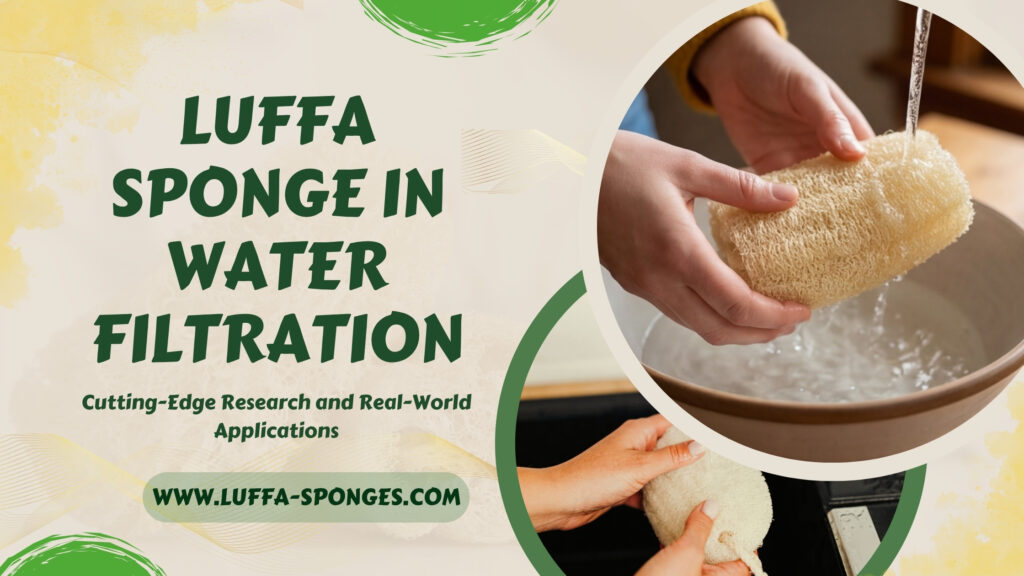
More than 2 billion people worldwide lack access to safely managed drinking water, and the global cost of industrial water treatment runs into hundreds of billions annually. Against that backdrop, a dried gourd fiber that removes 70 to 95 percent of heavy metal ions from contaminated water at a fraction of the cost of conventional treatment media is not a curiosity. It is a genuinely important discovery. Luffa sponge water filtration research has been accelerating since the early 2000s, and the results consistently point to a natural material with capabilities that surprise even seasoned water treatment engineers.
For R&D professionals and environmental engineers, luffa offers a chemically modifiable, mechanically resilient, fully biodegradable filtration platform with documented performance across heavy metals, synthetic dyes, suspended particles, and emerging contaminants. For wholesale buyers and product developers, the same material that drives scientific interest is the raw luffa fiber your customers already trust for bath and kitchen applications, with an industrial dimension that opens entirely new market segments. For eco-conscious consumers, knowing that luffa sponge contributes to water remediation technology adds real depth to an already compelling sustainability story.
This article covers the current state of luffa sponge water filtration research, from the fundamental material properties that enable filtration performance to specific contaminant removal data, real-world application scenarios, scale-up considerations, and how sourcing quality affects research and commercial outcomes.
The Material Science Behind Luffa Sponge Water Filtration Research
Before examining specific filtration data, understanding why luffa works as a filtration medium is essential. The performance does not come from any single property. It emerges from a combination of structural, chemical, and physical characteristics that interact in ways conventional synthetic filter media cannot replicate at comparable cost.
Pore Architecture and Surface Area
Luffa sponge is a naturally open-cell reticular network derived from the dried vascular structure of the Luffa aegyptiaca plant. Its total porosity ranges from 85 to 93 percent, with interconnected pores spanning 100 to 800 micrometers in diameter. This architecture creates a depth filtration effect rather than simple surface filtration, trapping particles and adsorbing contaminants at multiple layers as fluid passes through the material volume.
The internal surface area accessible to fluids is substantially higher than the external dimensions suggest. This high surface area is the foundational driver of adsorption capacity for dissolved contaminants including heavy metal ions and organic dye molecules. Surface area per unit mass values reported for luffa sponge range from 0.5 to 2.5 square meters per gram for untreated material, increasing significantly after surface functionalization treatments.
Cellulose Surface Chemistry and Reactive Sites
Luffa fiber is composed of 60 to 70 percent cellulose, with the remainder consisting of hemicellulose and lignin. Cellulose chains present hydroxyl groups on their surfaces, which provide natural binding sites for positively charged metal ions through ion exchange and complexation mechanisms. This is why even untreated luffa demonstrates measurable heavy metal removal capacity without any chemical modification.
Hemicellulose adds carboxyl and acetyl groups that further contribute to cation exchange capacity. Lignin contributes phenolic hydroxyl groups with their own metal complexation behavior. The combined effect is a chemically heterogeneous surface that interacts with a broader range of contaminants than any single functional group material would.
The practical implication for filtration researchers is that luffa provides a ready-made multi-functional starting material. Further chemical modification amplifies specific removal pathways rather than building adsorption capacity from scratch, which is why surface-treated luffa achieves contaminant removal percentages that rival engineered adsorbent materials at a fraction of the preparation cost.
Heavy Metal Removal: The Most Documented Luffa Filtration Application
Heavy metal contamination of industrial wastewater and groundwater is among the most serious water quality challenges globally, and luffa sponge water filtration research is most extensive in this category. Published results across peer-reviewed environmental chemistry and materials journals document consistent performance across multiple metal species.
Documented Removal Efficiencies by Metal Species
The table below summarizes removal efficiency data from published luffa filtration research across commonly studied heavy metals. Values reflect optimized experimental conditions with appropriate pH, contact time, and luffa preparation methods noted in original studies.
| Metal Ion | Untreated Luffa Removal | Surface-Treated Luffa Removal | Optimal pH Range | Contact Time to Equilibrium |
|---|---|---|---|---|
| Lead (Pb2+) | 65 to 80 percent | 85 to 95 percent | 4.5 to 6.0 | 30 to 60 minutes |
| Cadmium (Cd2+) | 55 to 72 percent | 80 to 92 percent | 5.0 to 7.0 | 45 to 90 minutes |
| Copper (Cu2+) | 60 to 78 percent | 82 to 94 percent | 4.0 to 6.5 | 30 to 60 minutes |
| Zinc (Zn2+) | 50 to 68 percent | 75 to 88 percent | 5.5 to 7.0 | 60 to 120 minutes |
| Chromium (Cr6+) | 40 to 60 percent | 70 to 85 percent | 2.0 to 4.0 | 60 to 90 minutes |
| Nickel (Ni2+) | 45 to 65 percent | 72 to 87 percent | 5.0 to 7.0 | 45 to 90 minutes |
The performance advantage of surface-treated luffa over untreated material is consistent across all metal species, typically adding 15 to 20 percentage points of removal efficiency. The most common and effective surface treatments documented in research include acid activation with dilute hydrochloric or citric acid, amine grafting for anion-active metals like hexavalent chromium, and oxidative treatment with sodium periodate to increase aldehyde functional groups.
Adsorption Kinetics and Capacity Parameters
Published Langmuir isotherm analyses on luffa sorbents report maximum adsorption capacities of 15 to 45 milligrams of metal per gram of dry luffa depending on the metal species and surface treatment applied. Lead and copper show the highest capacities on amine-functionalized luffa, consistent with their strong complexation tendency toward nitrogen donor atoms.
These capacity values are directly relevant to industrial application design. A filtration bed containing 1 kilogram of dry modified luffa can theoretically remove 15 to 45 grams of heavy metal before reaching saturation, allowing engineers to size treatment systems against known effluent loading rates. Regeneration studies show that acid-washed luffa sorbents can be reused for 5 to 8 treatment cycles before significant capacity loss, with the removed metals potentially recoverable for recycling depending on the industrial context.
For industrial buyers evaluating luffa for wastewater treatment system development, consistent raw material quality is non-negotiable. Batch-to-batch variation in fiber density and cellulose content directly affects adsorption capacity, making sourcing from a documented supplier critical.
Synthetic Dye and Organic Contaminant Removal Research
Textile manufacturing and dye processing generate some of the most chemically persistent industrial wastewater streams. Synthetic dyes are designed to resist degradation, which makes them resistant to conventional biological treatment. Luffa sponge water filtration research in this area has produced results that are directly applicable to industrial pretreatment systems.
Dye Removal Mechanisms and Performance Data
Dye removal by luffa sponge occurs through multiple simultaneous mechanisms including physical entrapment in pores, electrostatic attraction between charged dye molecules and fiber surfaces, and hydrogen bonding between dye functional groups and cellulose hydroxyl groups. The multi-mechanism nature of adsorption is an advantage because it creates broader removal capability across structurally diverse dye classes.
Published removal efficiencies for commonly studied textile dyes are presented below.
| Dye Class | Example Compound | Untreated Luffa Removal | Modified Luffa Removal | Charge Type |
|---|---|---|---|---|
| Basic/Cationic | Methylene Blue | 75 to 88 percent | 90 to 97 percent | Positive |
| Basic/Cationic | Crystal Violet | 70 to 85 percent | 88 to 96 percent | Positive |
| Reactive | Reactive Red 120 | 50 to 68 percent | 72 to 85 percent | Negative |
| Reactive | Reactive Blue 19 | 45 to 65 percent | 68 to 82 percent | Negative |
| Direct | Congo Red | 55 to 72 percent | 78 to 90 percent | Negative |
| Acid | Acid Orange 7 | 40 to 60 percent | 65 to 80 percent | Negative |
Cationic dyes consistently show higher removal by untreated luffa because the natural cellulose surface carries a net negative charge under neutral conditions, attracting positively charged dye molecules electrostatically. Anionic dyes require surface modification to introduce positive charges for improved removal. This selectivity pattern is important for treatment system designers targeting specific dye effluent streams.
Emerging Organic Contaminants
Beyond synthetic dyes, recent luffa water filtration research has expanded to pharmaceutical compounds, endocrine-disrupting chemicals, and pesticide residues, categories of emerging concern in drinking water and agricultural runoff treatment. Early results for several pharmaceutical compounds in synthetic water samples are promising.
While these results are preliminary and largely limited to laboratory batch studies, they establish a direction for research that could significantly expand the commercial relevance of luffa-based filtration in municipal water treatment and agricultural drainage management.
If you are developing luffa-based filtration products for commercial sale, EGEXO’s private label manufacturing program allows you to bring branded filtration products to market with full material quality backing.
Microplastic and Suspended Particle Filtration
Microplastic contamination in water systems has emerged as a critical environmental and public health concern, with particles detected in drinking water sources, marine environments, and even human tissue samples. Luffa sponge water filtration research in this area is newer but progressing rapidly.
Physical Filtration Mechanism for Particles
The interconnected pore structure of luffa sponge creates a physical barrier for suspended particles through a combination of straining, interception, and inertial impaction, the same mechanisms employed by engineered depth filtration media like sand beds and fiber cartridges. The range of pore sizes present within the luffa matrix, from 100 to 800 micrometers, creates a gradient that captures particles across a size distribution rather than only particles exceeding a single cutoff diameter.
Published laboratory studies on luffa filter beds report removal of 50 to 75 percent of microplastic particles in the 50 to 500 micrometer size range from water flowing at rates practical for small-scale treatment. Performance improves substantially with increased bed depth, with doubled bed depth typically adding 15 to 25 percentage points of removal efficiency.
Comparison with Conventional Physical Filter Media
| Filter Medium | Particle Size Removal Range | Pressure Drop | Biodegradable | Reusable Cycles | Cost Category |
|---|---|---|---|---|---|
| Luffa Sponge Bed | 50 to 500 micrometers | Low to moderate | Yes | 10 to 20 | Low |
| Sand Filter Bed | 20 to 200 micrometers | Low | Inert | 50 plus | Low |
| Polypropylene Fiber Cartridge | 1 to 100 micrometers | Moderate | No | 1 to 3 | Low to moderate |
| Ceramic Filter | 0.1 to 10 micrometers | High | Inert | 50 plus | Moderate to high |
| Activated Carbon Block | 0.5 to 50 micrometers | High | No | 3 to 6 | Moderate to high |
| Membrane Filter | 0.001 to 1 micrometer | Very high | No | Variable | High |
Luffa occupies a distinct niche as a low-pressure, low-cost, biodegradable first-stage physical filter suitable for removing larger particles before downstream fine filtration. Its practical role in most treatment train configurations is as a pretreatment medium that extends the life of more expensive downstream filter components by reducing the particle load they must handle.
For resource-constrained community water systems and decentralized treatment applications in developing regions, luffa-based filter beds offer a locally sourceable, low-maintenance first-stage filtration option that can significantly improve raw water quality entering primary treatment units.
Scaling Luffa Water Filtration from Laboratory to Real-World Applications
The gap between promising laboratory results and commercially deployed water treatment systems is where most natural sorbent research stalls. Luffa sponge water filtration research has not fully bridged this gap at industrial scale, but several factors position it more favorably than many competing natural materials for scale-up.
Factors Supporting Practical Scale-Up
Luffa grows as an annual agricultural crop with established cultivation practices across multiple tropical and subtropical regions. Egyptian production is concentrated in the Nile Delta. This agricultural scalability means raw material availability is not the limiting factor for luffa filtration technology commercialization.
The mechanical properties of luffa, specifically compression recovery of 80 to 90 percent over 1,000 cycles for high-quality material, support use in continuous flow systems where filter media must withstand operational pressures over extended periods. Luffa does not compact irreversibly under moderate hydraulic loading, which is a failure mode that limits some other natural fiber filter media in continuous-flow applications.
Regeneration with dilute acid or alkali solutions, followed by rinsing, restores 70 to 85 percent of initial adsorption capacity across 5 to 8 treatment cycles for heavy metal applications. This regenerability significantly reduces operating material cost compared to single-use filter media.
Current Real-World Applications and Pilot Projects
Documented real-world implementations of luffa water filtration are currently concentrated in research institution pilot systems, small-scale community water treatment in regions where luffa is locally available, and laboratory-scale industrial pretreatment demonstrations. Full-scale continuous industrial deployment remains limited primarily to specialized industrial R&D contexts.
The pathway to broader commercial application runs through several parallel development needs: standardization of performance specifications across luffa material grades, development of engineered filter cartridge formats that house luffa in industry-standard housings, and long-term pilot data from operational systems demonstrating sustained performance under real effluent conditions. Each of these development steps benefits from consistent, well-characterized raw material, which is where sourcing quality becomes a strategic consideration.
Understanding the full agricultural and processing chain behind your luffa source directly affects the reliability of your filtration development outcomes. See the EGEXO farm-to-export process.
Industrial and research buyers needing bulk raw luffa for filtration development can request a quotation directly from EGEXO, or order samples to evaluate material quality before full purchasing commitment.
Quality Specifications for Filtration-Grade Luffa
Not all luffa material performs equally in water filtration applications. Fiber density, chemical composition, processing method, and harvest maturity all influence filtration performance in measurable ways that directly affect experimental reproducibility and commercial treatment reliability.
Step-by-Step Luffa Quality Evaluation for Filtration Use
- Assess fiber density by comparing dry weight per unit volume across multiple samples from the same batch. Consistent density indicates uniform harvest maturity and processing, both critical for reproducible adsorption capacity.
- Perform a compression recovery test by compressing the sponge to 50 percent of its thickness and releasing. High-quality filtration-grade luffa should recover to within 85 to 90 percent of original thickness within 3 seconds.
- Inspect pore structure visually and by water flow-through test. Hold the sponge up to light and confirm visible open porosity throughout the structure. Then pour water through and confirm it flows freely with no pooling or channeling.
- Check for chemical treatment indicators. Over-bleached luffa has a uniformly bright white appearance and a faint chemical odor. Avoid this material for filtration applications where surface chemistry must remain natural or be defined by controlled modification.
- Confirm harvest origin documentation. Filtration research requires traceable material. Suppliers should be able to provide growing region, harvest season, and processing method for each batch.
- Request batch test data if available. Professional suppliers with industrial customers should be able to provide dry weight per unit volume, moisture content on delivery, and any relevant quality certification.
- Test sample performance in your target application before bulk ordering. Adsorption batch tests using your target contaminant at representative concentrations with a sample lot will confirm actual performance before full supply commitment.
For buyers exploring custom filtration product formats, EGEXO’s custom product design services support development of application-specific luffa filtration formats.
For raw luffa material suited to filtration research and industrial applications, EGEXO’s raw loofah scrubbers are available for bulk orders. Download the complete product catalog for full specifications across available sizes and forms.
DIY and Small-Scale Luffa Water Filtration for Eco-Conscious Consumers
While the majority of luffa water filtration research targets industrial and municipal applications, the same principles apply to small-scale use cases that are accessible to individual consumers and DIY enthusiasts interested in sustainable water management.
Home-Scale Applications Supported by Research
Garden irrigation prefilters using luffa sponge sections in-line with drip irrigation systems can reduce suspended particle loading that clogs drip emitters, extending system maintenance intervals. Aquarium and ornamental pond hobbyists have documented luffa sponge as a biological and mechanical filter medium in low-flow applications, where its porous structure supports biofilm colonization by beneficial nitrifying bacteria alongside physical particle capture.
For consumers interested in sustainable home water management, luffa-based prefilters for rain barrels and collected rainwater systems represent a practical application of the same adsorption and physical filtration mechanisms documented in research literature. While luffa is not a drinking water treatment solution at home scale without additional disinfection stages, it can meaningfully improve the clarity and reduce the suspended solids content of water used for garden irrigation and outdoor cleaning.
The same natural luffa products used for personal care can serve these small-scale filtration purposes, making luffa one of the most genuinely multi-functional natural materials available to environmentally conscious consumers. See our products, or browse the bath and body loofah collection and kitchen loofah range for product options suited to both personal care and household utility applications.
Expert Insight from EGEXO
Water treatment researchers and industrial buyers frequently ask us whether luffa from different sources performs consistently in filtration applications. Our honest answer is that it does not. The cellulose content, surface chemistry, and pore structure of luffa fiber vary significantly based on soil nutrition, harvest timing, and processing method. Luffa harvested early has incomplete lignin deposition, which affects both mechanical resilience under hydraulic pressure and the density of surface functional groups available for metal complexation.
For filtration researchers who need batch-to-batch reproducibility and for industrial buyers who need predictable treatment performance, material traceability is not an optional nice-to-have. It is a fundamental specification requirement. Learn more about our approach at why choose EGEXO.
FAQ Section
Q1: What is luffa sponge water filtration research and what has it demonstrated? Luffa sponge water filtration research is the scientific investigation of luffa fiber as a medium for removing contaminants from water, including heavy metals, synthetic dyes, suspended particles, and emerging organic pollutants. Published research has explored heavy metal ion and dye removal using surface-treated luffa. The results establish luffa as a credible low-cost alternative to more expensive conventional filtration media for moderate contamination scenarios.
Q2: Which heavy metals can luffa sponge effectively remove from water? Luffa sponge demonstrates documented removal capability for lead, cadmium, copper, zinc, chromium, and nickel from aqueous solutions. Performance is pH-dependent and optimized at different pH ranges for different metals.
Q3: Can luffa sponge be used for microplastic removal from water? Yes, with important qualifications. Published laboratory studies show luffa filter beds removing 50 to 75 percent of microplastic particles in the 50 to 500 micrometer size range through physical depth filtration. Performance improves with increased bed depth. Luffa is not effective for removing nanoplastics or very small microplastic fragments below approximately 50 micrometers, which require membrane filtration. Its practical role is as a first-stage physical pretreatment medium that reduces larger particle load before downstream fine filtration stages.
Q4: How many times can luffa sorbent be regenerated for water treatment use? Regeneration studies show that acid-washed luffa sorbents, particularly those used for heavy metal removal, can be regenerated and reused. Dilute hydrochloric acid or citric acid solutions at pH 2 to 3 are the most commonly documented regeneration agents. The removed metals are potentially recoverable from the regeneration solution, adding economic value in industrial contexts with metal recovery infrastructure.
Q5: How does luffa filtration performance compare to activated carbon? For heavy metal removal, surface-treated luffa works at lower material cost and with significantly lower preparation complexity than activated carbon, which requires high-temperature activation processes. For organic compound adsorption, activated carbon typically outperforms unmodified luffa. Modified luffa narrows this gap for specific target compounds. The key practical advantage of luffa over activated carbon is its combination of renewable agricultural sourcing, full biodegradability, and low preparation energy requirement.
Q6: What quality of luffa should researchers and industrial buyers specify for filtration applications? Filtration applications require high fiber density, uniform pore structure, natural processing without aggressive bleaching, and traceable agricultural origin. Bleached luffa has degraded surface chemistry. Buyers should request dry weight per unit volume data and compression recovery specifications from suppliers, and always test sample lots in representative batch experiments before committing to bulk supply. EGEXO offers paid samples through its sample request page.
Q7: Is luffa water filtration applicable to home or DIY use? At home scale, luffa sponge is appropriate as a mechanical prefilter for garden irrigation systems, rain barrel inlets, aquarium biological filters, and ornamental pond systems. It reduces suspended particle loads and supports beneficial biofilm growth in biological filtration applications. Luffa is not a standalone drinking water treatment solution and should not be used as one without additional disinfection stages. For eco-conscious consumers interested in sustainable water management, luffa-based prefilters represent a practical, biodegradable alternative to synthetic filter media for non-potable applications.
Q8: Where is the best raw luffa for filtration research sourced, and why does origin matter? Egyptian luffa, particularly from the Nile Delta region where EGEXO has its farms, is softer, with a looser fibre weave than Asian loofah. Batch-to-batch consistency from a documented agricultural source is critical for research reproducibility and commercial treatment reliability. Inconsistent raw material is the most common cause of irreproducible results in luffa filtration studies.
Conclusion
Luffa sponge water filtration research has moved well beyond preliminary investigation into a body of documented evidence that positions this agricultural material as a genuinely viable option for specific water treatment challenges.
For industrial buyers and product developers, the commercial opportunity in luffa-based water treatment products is real and growing, driven by tightening industrial discharge regulations, rising demand for sustainable treatment alternatives, and the scalable agricultural supply chain that Egyptian luffa cultivation provides. For researchers, consistent raw material from a traceable source is the foundation of reproducible outcomes. For eco-conscious consumers, luffa filtration is both a scientific story and a practical option for sustainable small-scale water management.
EGEXO has been exporting Egyptian loofah since 2015.
Key Takeaways:
- Surface-treated Egyptian luffa achieves heavy metal removal of 70 to 95 percent, competitive with activated carbon at significantly lower cost
- Luffa sponge removes 65 to 97 percent of cationic textile dyes through combined physical and chemical adsorption mechanisms
- Luffa filter beds remove 50 to 75 percent of microplastic particles in the 50 to 500 micrometer range, functioning as effective first-stage physical pretreatment
- Acid-washed luffa sorbents can be regenerated and reused for 5 to 8 treatment cycles, substantially reducing operating material cost
- Raw material quality, specifically fiber density, surface chemistry, and agricultural traceability, is the primary variable determining filtration performance reproducibility
Ready to source filtration-grade Egyptian luffa?
- For Wholesale and Research Buyers: Request a quotation or download the product catalog
- Products: See our products or request samples