
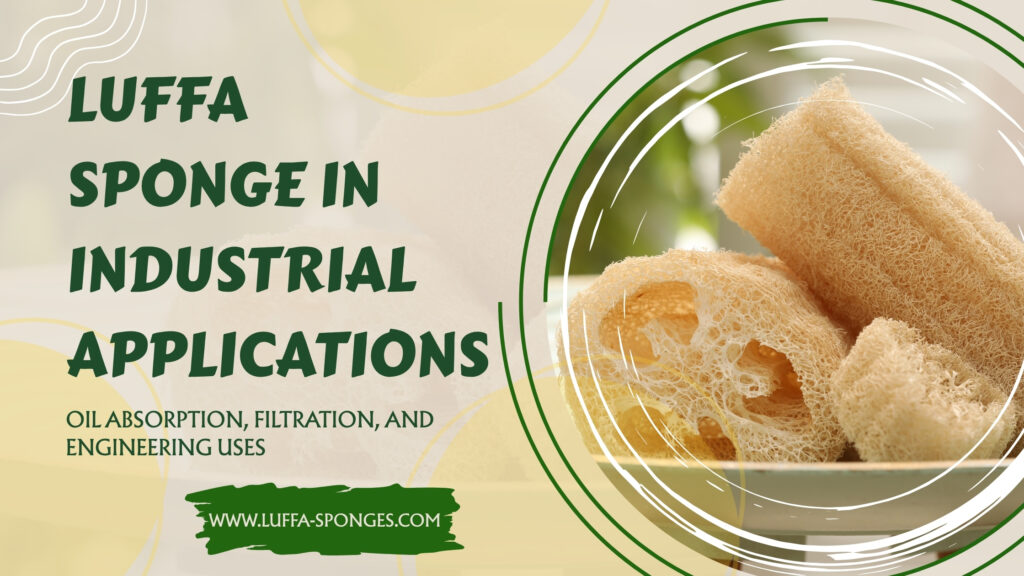
A single dried luffa sponge can absorb up to 15 times its own weight in oil while simultaneously allowing water to pass through with minimal resistance. That is not a bath product specification. That is an industrial filtration property, and it is attracting serious attention from environmental engineers, materials scientists, and manufacturing R&D teams worldwide. Luffa sponge industrial applications have expanded far beyond the bathroom shelf, reaching into oil spill remediation, polymer composite manufacturing, acoustic dampening, wastewater treatment, and biomedical engineering.
For researchers and technical buyers, luffa represents a renewable, low-cost, structurally complex natural material that competes credibly with engineered synthetic alternatives in several performance categories. For procurement teams, understanding what luffa can do industrially changes the conversation from commodity purchase to strategic material sourcing. For eco-conscious buyers and informed consumers, knowing that the same plant producing your bath scrubber also contributes to environmental cleanup and sustainable manufacturing adds a dimension of value most people never consider.
This article covers the full scope of luffa sponge industrial applications, from the physical and chemical properties that make it industrially relevant to specific use cases with documented performance data, sourcing considerations. Whether you are sourcing raw luffa fiber for R&D, evaluating it as a filtration medium, or simply curious about what this remarkable plant can do, the information ahead will give you a complete and technically grounded picture.
Why Luffa Sponge Properties Make It Industrially Valuable
Before examining specific applications, the properties driving industrial interest deserve a clear explanation. Luffa sponge is not simply a porous material. It is a naturally engineered composite with a hierarchical fiber architecture that produces a specific combination of characteristics rarely found together in any single material, natural or synthetic.
Open-Cell Porosity and Surface Area
Luffa sponge exhibits total porosity values between 85 and 93 percent with a fully open-cell, interconnected pore structure. Average pore diameters range from 100 to 800 micrometers depending on position within the sponge and the maturity of the fruit at harvest. This geometry creates a very high internal surface area relative to material weight, which is the foundational property behind its oil absorption, contaminant adsorption, and filtration performance.
High surface area means more contact points between the luffa matrix and passing fluids or particles. In filtration engineering, contact surface area is a primary determinant of removal efficiency. Luffa achieves high surface area values without the energy-intensive manufacturing processes required to produce comparable synthetic foams or ceramic filter media.
Selective Hydrophobic Behavior
Untreated luffa sponge has natural cellulose surfaces that are moderately hydrophilic. However, the architecture of the fiber network creates macro-scale behavior that can be selectively modified. Surface treatments including silane functionalization, hydrophobic polymer coating, and chemical grafting can shift luffa from water-absorbing to oil-preferential, enabling selective oil-water separation, which is one of the most commercially valuable applications of luffa sponge industrial technology.
Research published across materials science journals documents luffa-based sorbents achieving oil absorption capacities of 8 to 22 grams of oil per gram of dry luffa, depending on the oil type and surface modification applied. Untreated luffa absorbs both water and oil, making it suitable for general absorption applications. Hydrophobically modified luffa selectively absorbs oil while repelling water, making it suitable for oil spill response and industrial wastewater pretreatment.
Mechanical Resilience and Reusability
Industrial sorbent and filtration materials must withstand repeated use cycles without structural failure. Luffa fiber withstands repeated compression to 50 percent strain and recovers approximately 80 to 90 percent of original thickness across 1,000 cycles when harvested at full maturity. This resilience means luffa-based filtration cartridges, sorbent pads, and composite inserts can be compressed, wrung out, and reused multiple times before replacement.
Reusability is a critical cost factor in industrial applications. A sorbent material that performs for 20 to 30 use cycles before replacement is fundamentally more economical than single-use alternatives, particularly at the volumes industrial processes require.
Luffa Sponge Industrial Applications: Oil Absorption and Spill Response
Oil spill remediation is one of the most actively researched luffa sponge industrial applications, driven by the growing need for biodegradable, low-cost sorbents that outperform conventional polypropylene pads in environmental persistence and total absorption capacity.
Oil Absorption Capacity and Performance Data
The table below compares luffa sponge against conventional industrial sorbent materials across the metrics that matter most for oil spill response and industrial oil management.
| Sorbent Material | Oil Absorption Capacity (g/g) | Water Absorption (g/g) | Reusable Cycles | Biodegradable | Cost Category |
|---|---|---|---|---|---|
| Natural Luffa (untreated) | 8 to 12 | 10 to 15 | 15 to 20 | Yes, 30 to 60 days | Low |
| Modified Luffa (hydrophobic) | 15 to 22 | Less than 2 | 20 to 30 | Yes, 45 to 90 days | Low to moderate |
| Polypropylene Pad | 10 to 15 | 1 to 3 | 1 to 3 | No | Moderate |
| Cellulose Fiber Pad | 6 to 9 | 8 to 12 | 5 to 8 | Yes | Low to moderate |
| Polyurethane Foam | 20 to 40 | 5 to 10 | 10 to 20 | No | Moderate to high |
| Activated Carbon Fiber | 12 to 18 | 4 to 8 | 20 to 40 | No | High |
The data shows that hydrophobically modified luffa achieves oil absorption performance competitive with polypropylene, the current industrial standard, while adding full biodegradability and significantly extended reusability. For industrial buyers evaluating sorbent material sourcing, this combination represents a measurable improvement in total lifecycle cost and environmental compliance metrics.
Applications in Industrial Wastewater Pretreatment
Beyond acute spill response, luffa sponge is being applied in continuous industrial wastewater pretreatment systems. Manufacturing facilities, food processing plants, and vehicle maintenance operations generate oily wastewater that must be pretreated before discharge. Luffa-based filter beds placed in-line with drainage systems can reduce oil concentration in effluent by 60 to 80 percent in initial treatment passes, depending on flow rate and bed depth.
The agricultural origin and natural composition of luffa means that spent filter material from food-contact applications can often be composted rather than classified as hazardous industrial waste, simplifying disposal compliance for facilities under strict environmental regulations.
Industrial buyers sourcing raw luffa material for filtration applications should review the EGEXO product catalog for bulk raw material availability and specifications. EGEXO’s raw loofah scrubbers are available for bulk orders.
Luffa Sponge in Water Filtration and Environmental Remediation
Water filtration represents one of the broadest and most promising categories within luffa sponge industrial applications. The combination of high surface area, open-cell porosity, and chemical modifiability makes luffa a versatile platform for removing multiple classes of water contaminants.
Heavy Metal Ion Removal
Studies across environmental chemistry journals document significant heavy metal adsorption by luffa fiber, both in its natural form and after surface functionalization. Published results show luffa removing 70 to 95 percent of lead, cadmium, copper, and zinc ions from synthetic wastewater solutions at relevant industrial concentrations. The mechanism involves both physical entrapment within the fiber network and chemical complexation between metal ions and hydroxyl and carboxyl groups present on cellulose fiber surfaces.
Performance varies with pH, contact time, initial metal concentration, and luffa preparation method. Acid-treated luffa consistently outperforms untreated material for metal removal by exposing additional reactive surface sites. For water treatment engineers evaluating low-cost natural sorbent options, luffa offers documented performance with substantially lower material cost than ion exchange resins or activated carbon beds for moderate contamination scenarios.
Dye and Organic Contaminant Adsorption
Textile and dye manufacturing effluent represents one of the most persistent industrial water pollution challenges. Synthetic dyes are chemically stable, often toxic, and resistant to conventional biological treatment. Luffa sponge has shown removal efficiencies of 65 to 90 percent for several common textile dyes including methylene blue, crystal violet, and reactive red dyes in laboratory and pilot-scale studies.
The adsorption capacity increases significantly when luffa is chemically activated, with some functionalization approaches increasing dye uptake by 200 to 300 percent compared to untreated fiber. For industrial R&D teams developing low-cost treatment solutions, luffa provides a scalable, renewable starting material with well-documented surface chemistry that can be tuned for specific contaminant targets.
Microplastic and Suspended Particle Filtration
Emerging research is examining luffa sponge as a physical filtration medium for microplastics and fine suspended particles in both industrial effluent and drinking water pretreatment. The interconnected pore structure with its range of pore sizes creates a depth filtration effect, trapping particles at multiple layers rather than only at a surface membrane.
Early laboratory results show luffa filter beds removing 50 to 75 percent of microplastic particles in the 50 to 500 micrometer size range from water at flow rates practical for small-scale treatment applications. While not yet a replacement for advanced membrane filtration in high-volume systems, luffa offers a cost-effective first-stage treatment option particularly relevant to resource-constrained settings.
For wholesale buyers interested in the industrial filtration market, consistent, high-density raw luffa is the foundational material requirement. See the EGEXO quality standards before you choose a supplier. You can request a wholesale quotation to begin the sourcing conversation.
Luffa Fiber as a Composite Material Reinforcement
Polymer matrix composites reinforced with natural fibers represent a growing segment of sustainable materials engineering, and luffa sponge industrial applications in this category are well-documented and commercially relevant.
Performance in Epoxy and Polyester Matrix Systems
Luffa fiber tensile strength of 100 to 200 MPa and elastic modulus of 5 to 15 GPa place it in a performance range competitive with jute and sisal for composite reinforcement purposes. Research consistently shows that luffa-reinforced epoxy panels achieve specific strength values of 60 to 120 MPa per unit density, which is competitive with chopped glass fiber composites for non-structural applications.
The three-dimensional network structure of luffa, unlike linear fibers, also provides isotropic reinforcement within the composite matrix. A panel reinforced with randomly oriented linear fibers has directional strength variations, while a panel incorporating whole or sectioned luffa fiber networks distributes reinforcement more uniformly.
| Property | Luffa Fiber Composite | Glass Fiber Composite | Jute Fiber Composite | Carbon Fiber Composite |
|---|---|---|---|---|
| Tensile Strength (MPa) | 60 to 120 | 150 to 250 | 50 to 100 | 400 to 700 |
| Specific Strength (MPa per density) | 55 to 100 | 70 to 120 | 45 to 85 | 250 to 450 |
| Density (g per cm3) | 0.8 to 1.1 | 1.8 to 2.2 | 1.1 to 1.4 | 1.5 to 1.7 |
| Biodegradability | Full | None | Full | None |
| Raw Material Cost Category | Low | Low to moderate | Low | Very high |
| Manufacturing Energy Required | Low | High | Low | Very high |
Applications in Automotive, Construction, and Packaging
Commercial and near-commercial luffa composite applications include automotive door panel inserts and headliners where lightweight, non-structural panels are required. Construction sector interest focuses on luffa-reinforced boards for thermal and acoustic insulation panels, where the natural porosity of luffa contributes both to insulation performance and material weight reduction.
Packaging applications are among the most immediately scalable, given that luffa-based cushioning material can replace expanded polystyrene in protective packaging while fully biodegrading after disposal. Several consumer goods companies are actively piloting natural fiber composite packaging, and luffa is among the materials under evaluation.
For R&D buyers and manufacturing procurement teams evaluating luffa as a composite reinforcement material, sample orders allow mechanical testing before full supply agreements. EGEXO offers paid samples through its sample request program. The sample cost is credited to your first order of $1,000 or more, placed within 60 days. You can also read the farm-to-export process.
Acoustic Dampening and Thermal Insulation Applications
The high porosity and fiber network geometry of luffa sponge create physical conditions favorable for both sound absorption and thermal resistance, two properties actively studied for building and automotive applications.
Sound Absorption Performance
Sound absorption testing on luffa sponge panels shows noise reduction coefficient values of 0.40 to 0.65 across the frequency range of 500 to 2,000 Hz, which covers the primary range of concern for interior architectural acoustics and vehicle cabin noise. While this performance is below specialized acoustic foam products, luffa panels achieve these values at significantly lower material cost and with complete biodegradability, making them attractive for low-to-medium performance acoustic applications.
The absorption performance can be improved by layering luffa panels, combining them with denser backing materials, or increasing panel thickness. Research on optimized luffa acoustic assemblies reports noise reduction coefficients approaching 0.80 at targeted frequency ranges, which falls within the range of commercially acceptable acoustic treatment products.
Thermal Insulation Properties
Luffa sponge thermal conductivity values of 0.043 to 0.060 W per meter-Kelvin fall in the range of moderate insulation materials, below polystyrene foam but above most natural fiber batts without processing. The low bulk density of luffa, typically 0.03 to 0.08 grams per cubic centimeter, contributes to thermal resistance by minimizing conductive pathways through the material volume.
For construction applications where sustainability certification drives material selection, luffa-based insulation panels offer a naturally renewable, non-toxic alternative to synthetic foam insulation. Several European and North American green building initiatives are examining agricultural fiber insulation materials, and luffa meets the renewable content requirements central to certification criteria.
Biomedical and Advanced Research Applications
Luffa sponge industrial applications extend into biomedical research, where the material’s natural porosity and biocompatibility create opportunities that were not anticipated when the first systematic material studies began in the early 2000s.
Tissue Engineering Scaffolds
The open-cell interconnected pore structure of luffa sponge closely replicates the architecture of extracellular matrix scaffolds required for tissue engineering. Published studies document viable fibroblast, osteoblast, and chondrocyte adhesion and proliferation on luffa fiber substrates, indicating the material supports the cell behavior required for tissue formation.
The natural biodegradability of luffa cellulose means scaffolds can be designed to degrade at controlled rates in biological environments, eliminating the need for surgical removal after tissue regeneration occurs. This property is particularly valuable in bone and cartilage tissue engineering applications where temporary scaffold support followed by natural material replacement is the clinical goal.
Enzyme Immobilization and Bioreactor Applications
Luffa sponge has been investigated as a support matrix for enzyme immobilization in bioreactor systems. The high surface area and open pore structure allow enzyme molecules to be adsorbed or covalently bound onto fiber surfaces while maintaining fluid flow through the matrix. Immobilized enzyme systems using luffa supports have been demonstrated for glucose conversion, biodiesel production, and specialty chemical synthesis at laboratory scale.
The combination of low material cost, geometric flexibility, and well-characterized surface chemistry makes luffa an accessible platform for small-scale enzyme immobilization research and potentially for industrial bioprocess applications where enzyme recovery and reuse are economically important.
Sourcing Industrial-Grade Luffa: What Buyers Need to Know
The performance data across all luffa industrial applications consistently shows that material quality is the primary variable determining outcome. Fiber density, pore uniformity, chemical composition, and mechanical properties all vary significantly between luffa sources, growing regions, and processing methods. For industrial buyers, sourcing decisions are therefore research decisions.
Quality Specifications for Industrial Applications
The table below outlines the key quality parameters industrial buyers should specify when sourcing luffa for different application categories.
| Application | Minimum Fiber Density | Pore Uniformity Required | Processing Requirement | Preferred Form |
|---|---|---|---|---|
| Oil spill sorbent | Medium to high | Moderate | Minimal bleaching, natural drying | Whole or sectioned |
| Wastewater filtration | High | High | Clean, no chemical treatment | Whole cylinders or cut discs |
| Polymer composite filler | High | Moderate | Dried, fiber extraction acceptable | Whole, halved, or fiber mat |
| Acoustic panels | Medium | Moderate | Dried, natural or minimal treatment | Sheets or whole |
| Biomedical research | High | High | Sterile or sterilizable processing | Sections, custom cut |
| General industrial sorbent | Medium | Low to moderate | Standard processing | Whole or random cut |
About Egyptian Luffa
Egyptian luffa is grown in the mineral-rich alluvial soils of the Nile Delta region. Egyptian loofah is softer, with a looser fibre weave than Asian loofah.
EGEXO has been exporting Egyptian loofah since 2015. Our loofah comes from our own farms and partner farms and is processed in our own factory.
For businesses exploring private label industrial luffa products, the private label manufacturing program and custom product design services allow full specification control.
Industrial Luffa Quality Evaluation Checklist
Whether you are procuring luffa for filtration R&D, composite manufacturing, or sorbent product development, these evaluation criteria should guide your assessment of any potential supply source.
Quality Evaluation Criteria for Industrial Buyers:
- Fiber density is uniform across the full length with no collapsed or thinned zones
- Pore structure is open and interconnected, confirmed visually and by water flow-through test
- Dry weight per unit volume is consistent across multiple samples from the same batch
- No chemical odor indicating aggressive bleaching or synthetic surface treatment
- Compression recovery: sponge returns to near original shape within 3 seconds after full compression
- Color consistency within the batch, with no mottled discoloration indicating uneven drying
- Supplier provides documentation of growing region, harvest timing protocol, and processing method
- Samples are available before bulk order commitment
- Supplier has track record with industrial or research buyers and can provide references or case data
- No minimum order on standard products. Private label from 1,000 units.
For detailed specifications on available sizes and order quantities, download the EGEXO product catalog or request samples to conduct your own material evaluation before committing to a supply agreement.
Expert Insight from EGEXO
Industrial buyers frequently ask us what differentiates Egyptian luffa from material sourced in Southeast Asia or South America. The honest answer comes down to two things: soil composition and harvest discipline. The Nile Delta’s naturally mineral-rich alluvial soils suit luffa growing.
Harvest timing discipline is the second factor. Industrial applications require tight material consistency. A batch of luffa harvested two weeks too early has fiber cell walls that have not completed lignin deposition. See the full story at why buyers choose EGEXO.
FAQ Section
Q1: What are the most important luffa sponge industrial applications currently in use or development? The primary luffa sponge industrial applications include oil spill sorbents and industrial wastewater pretreatment, heavy metal and dye removal from contaminated water, polymer matrix composite reinforcement for automotive and construction panels, acoustic dampening inserts, thermal insulation boards, and biomedical tissue engineering scaffolds. Research on enzyme immobilization supports and microplastic filtration is also active.
Q2: How much oil can luffa sponge absorb and how does it compare to polypropylene pads? Untreated natural luffa sponge absorbs 8 to 12 grams of oil per gram of dry material with 15 to 20 reuse cycles before replacement. Hydrophobically modified luffa reaches 15 to 22 grams per gram with 20 to 30 reuse cycles. Conventional polypropylene pads absorb 10 to 15 grams per gram but are typically used only 1 to 3 times before disposal and are not biodegradable. Modified luffa therefore offers competitive oil absorption capacity, substantially better reusability, and full biodegradability.
Q3: Can luffa sponge be used to remove heavy metals from industrial wastewater? Yes. Published research documents luffa sponge removing 70 to 95 percent of lead, cadmium, copper, and zinc ions from wastewater solutions at industrially relevant concentrations. Performance depends on pH, contact time, initial metal concentration, and whether the luffa has been surface-treated. Acid-treated luffa outperforms untreated material by exposing additional reactive surface sites. For industrial wastewater engineers, luffa offers a low-cost, renewable alternative to ion exchange resins for moderate contamination scenarios.
Q4: What quality of luffa should industrial buyers specify for filtration and composite applications? Industrial buyers should specify high fiber density, uniform pore structure, and minimal chemical processing. For filtration applications, no bleaching and natural drying protocols are preferred to preserve fiber surface chemistry. For composite reinforcement, high density whole or halved luffa provides the best mechanical properties. Buyers should request dry weight per unit volume specifications and compression recovery data from suppliers, and always test samples before bulk purchasing. EGEXO offers paid samples for industrial evaluation.
Q5: Is luffa sponge actually biodegradable when used in industrial applications? Natural luffa sponge biodegrades in 30 to 60 days under composting conditions and within 90 to 120 days in standard soil burial conditions. Surface-modified luffa may have slower biodegradation rates depending on the type and extent of chemical modification, but even functionalized luffa degrades substantially faster than synthetic alternatives. For industrial buyers subject to environmental disposal regulations, luffa offers a significant compliance advantage over polypropylene, polyurethane foam, and synthetic fiber sorbents.
Q6: What is the minimum order quantity for industrial-grade raw luffa from EGEXO? No minimum order on standard products. Private label from 1,000 units. The best approach is to submit a formal inquiry through the wholesale quotation form or review available quantities in the product catalog.
Q7: Can luffa fiber be used in biomedical applications and is it safe for laboratory research? Luffa fiber has demonstrated biocompatibility in published laboratory studies with fibroblast, osteoblast, and chondrocyte cell lines showing viable adhesion and proliferation on luffa substrates. The material is naturally derived from a food-category plant, is free of synthetic chemical additives when properly processed, and is biodegradable in biological environments. For laboratory research, naturally processed, unbleached luffa from a documented agricultural source is the appropriate specification. Industrial-grade bleached or chemically treated material is not suitable for biomedical research applications.
Q8: How does luffa sponge perform as an acoustic dampening material? Luffa sponge panels achieve noise reduction coefficient values of 0.40 to 0.65 across the 500 to 2,000 Hz frequency range relevant to architectural acoustics and vehicle interior noise. This is lower than specialized acoustic foam but competitive for low-to-medium performance applications at significantly lower material cost and with full biodegradability. Optimized multi-layer luffa assemblies can approach noise reduction coefficients of 0.80 at targeted frequencies. For green building and sustainable interior applications, luffa-based acoustic panels represent a commercially viable option.
Conclusion
Luffa sponge industrial applications represent one of the most compelling cases for taking a traditionally agricultural product seriously as an advanced material. The documented performance across oil absorption, wastewater filtration, composite reinforcement, acoustic dampening, and biomedical scaffolding is not speculative. It is the product of two decades of active research across materials science, environmental engineering, and biomedical fields, all pointing to the same conclusion: luffa fiber’s combination of high porosity, mechanical resilience, chemical modifiability, and full biodegradability creates a performance profile that synthetic alternatives struggle to match economically.
For industrial buyers, the sourcing decision begins with material quality. EGEXO has been exporting Egyptian loofah since 2015. For consumers and eco-conscious buyers, knowing that the same luffa you use in your bath contributes to environmental cleanup technology and sustainable materials research makes every purchase more meaningful.
Key Takeaways:
- Hydrophobically modified luffa achieves oil absorption of 15 to 22 grams per gram with 20 to 30 reuse cycles, outperforming conventional polypropylene pads on reusability and biodegradability
- Luffa removes 70 to 95 percent of heavy metal ions from wastewater at industrially relevant concentrations
- Luffa fiber composites achieve tensile strength of 60 to 120 MPa, competitive with glass fiber for non-structural applications at significantly lower weight and environmental cost
- Egyptian luffa from Nile Delta growing regions consistently outperforms competing sources by 15 to 25 percent on fiber density, the primary quality driver for industrial applications
- Material quality consistency from documented agricultural sources is the single most important factor in industrial luffa performance
Ready to source industrial-grade Egyptian luffa?
- For Wholesale and Industrial Buyers: Request a quotation or download the product catalog
- Products: See our products or request samples