
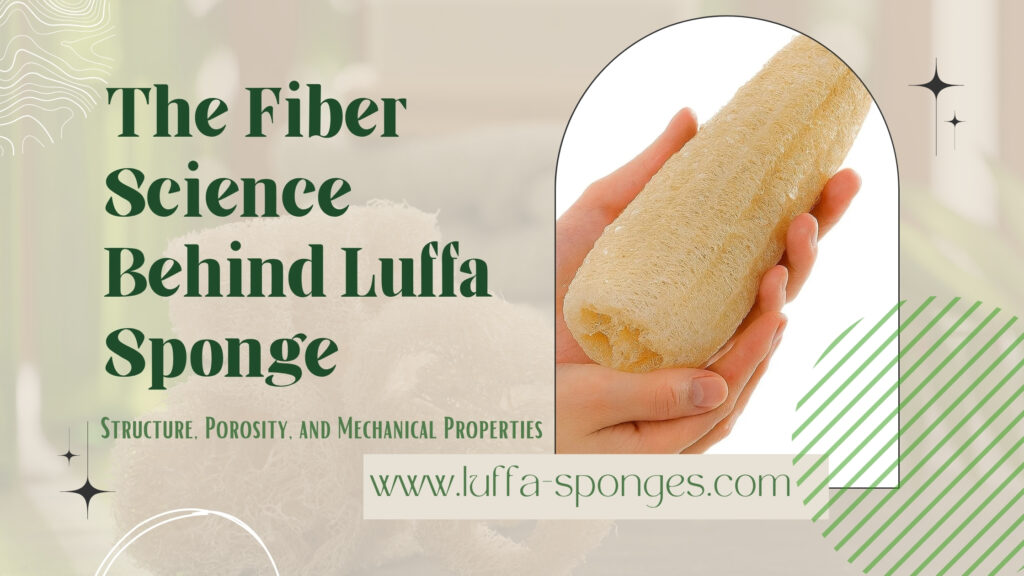
Few natural materials can match the architectural complexity hiding inside a humble luffa sponge. What looks like a simple bath scrubber is actually a precisely engineered biological scaffold, built from interlocking cellulose fibers arranged in ways that materials scientists still study today. Understanding luffa sponge fiber structure science is not just academic curiosity. It directly determines product performance, industrial suitability, processing outcomes, and end-user experience.
For wholesale buyers, spa owners, and industrial procurement teams, this knowledge sharpens your sourcing decisions and quality benchmarks. For individual consumers, eco-conscious shoppers, and DIY enthusiasts, it explains why a well-grown Egyptian luffa outperforms synthetic alternatives in durability, skin feel, and sustainability. For researchers and R&D professionals, the data here opens doors to composite materials, filtration systems, and biomedical scaffolding applications.
This article breaks down the full fiber science of luffa sponge, from its cellular architecture and porosity mechanics to its tensile strength, water absorption behavior, and how growing and processing conditions shape all of it. By the end, you will know exactly what separates a premium luffa from a mediocre one and why Egyptian luffa from growers like EGEXO is softer, with a looser fibre weave than Asian loofah.
What Is Luffa Sponge Made Of at the Fiber Level
Luffa sponge is derived from the dried vascular network of the Luffa aegyptiaca or Luffa acutangula plant, both members of the Cucurbitaceae family. When the fruit matures and dries, the fleshy outer layer falls away, leaving behind a three-dimensional fibrous skeleton composed almost entirely of lignocellulosic material.
Cellulose, Hemicellulose, and Lignin Composition
The dry luffa fiber matrix consists of roughly 60 to 70 percent cellulose, 15 to 20 percent hemicellulose, and 10 to 15 percent lignin, with the exact ratios depending on cultivar, growing region, and harvest maturity. Cellulose provides the primary structural backbone and tensile strength. Hemicellulose acts as a binding agent between cellulose microfibrils. Lignin reinforces the cell walls and contributes to the natural rigidity that gives luffa its characteristic firmness when dry.
This composition places luffa in the same structural category as industrial natural fibers like jute and sisal, but with a critical difference: the three-dimensional network geometry. Unlike linear fibers, luffa forms a foam-like reticular lattice, which changes its mechanical behavior entirely.
The Reticular Network Architecture
Under scanning electron microscopy, luffa fiber reveals a hierarchical structure. At the macro level, longitudinal fiber bundles run along the length of the gourd. These bundles are cross-linked by transverse and diagonal fibers, creating the characteristic diamond-shaped mesh visible to the naked eye. At the micro level, each fiber strand is itself a bundle of cellulose microfibrils embedded in a lignin-hemicellulose matrix.
This multi-scale hierarchy is what gives luffa its remarkable combination of flexibility and resilience. The macro network distributes mechanical loads across the entire structure rather than concentrating stress at single points, which is why a quality luffa can withstand repeated compression and return to shape.
Porosity: The Engineering Marvel Inside Every Luffa
Porosity is arguably the most commercially significant aspect of luffa sponge fiber structure science. It governs water absorption, soap retention, exfoliation intensity, airflow in industrial filtration, and even cell adhesion in biomedical applications.
Pore Size Distribution and Open-Cell Structure
Luffa sponge exhibits an open-cell porous structure, meaning the internal voids are interconnected rather than sealed. Published research places the average pore diameter in the range of 100 to 800 micrometers, with the distribution shifting based on the position within the sponge and the maturity of the fruit at harvest.
The outer cortical layers tend to have smaller, denser pores, which accounts for the slightly firmer texture on the surface. The inner core has larger, more open pores, creating a gradient that effectively mimics the layered exfoliation behavior preferred for body care. This natural gradient is not replicated in any synthetic loofah product.
Porosity Percentage and Its Practical Meaning
Studies measuring luffa void fraction report total porosity values between 85 and 93 percent. To put that in perspective, most commercial foam sponges used in industry or bathing operate at 70 to 80 percent porosity. The higher the porosity, the more volume is available for fluid storage and movement.
For bath and body applications, this means a luffa sponge holds significantly more lathered soap per square centimeter than synthetic alternatives, distributing it more evenly across skin. For industrial filtration and composite reinforcement, high porosity means lower material weight with maintained structural integrity.
| Property | Luffa Sponge | Synthetic Loofah | Conventional Foam |
|---|---|---|---|
| Total Porosity | 85 to 93 percent | 60 to 72 percent | 70 to 80 percent |
| Pore Type | Open-cell, interconnected | Closed or semi-open | Closed-cell |
| Average Pore Size (micrometers) | 100 to 800 | 50 to 300 | 150 to 500 |
| Water Absorption (g/g dry weight) | 8 to 15 | 3 to 6 | 5 to 9 |
| Biodegradability | Fully biodegradable | Non-biodegradable | Non-biodegradable |
| Structural Recovery After Compression | High | Moderate | Moderate to low over time |
Mechanical Properties: Tensile Strength, Flexibility, and Durability
Understanding the mechanical properties of luffa fiber is essential for anyone specifying luffa in industrial composites, evaluating bulk purchase quality, or simply wondering why one luffa lasts three months and another disintegrates in three weeks.
Tensile Strength and Fiber Stiffness
Individual luffa fiber strands have been measured with tensile strength values ranging from 100 to 200 MPa, comparable to several commercially used natural fiber reinforcements. The elastic modulus of luffa fiber falls between 5 and 15 GPa, placing it in a mid-range stiffness category that makes it suitable for lightweight composite panels, acoustic dampening materials, and packaging inserts.
What makes luffa unusual is that these properties are maintained within a flexible, compressible network. Single fibers are stiff, but the assembled reticular matrix is compliant. This combination is rarely found in synthetic analogs and explains why researchers in polymer composites and automotive interior materials have been actively investigating luffa as a reinforcing filler since the early 2000s.
Compression Recovery and Fatigue Behavior
Repeated compression testing on luffa specimens shows that a high-quality, fully mature luffa retains approximately 80 to 90 percent of its original thickness after 1,000 compression cycles at 50 percent strain. Lower-quality or immature luffa typically retains only 60 to 70 percent under the same conditions, visibly collapsing and thinning after extended use.
For wholesale buyers evaluating raw loofah scrubbers or finished bath products, this is a critical differentiation point. A luffa that collapses quickly is almost always harvested prematurely or processed under conditions that degrade fiber integrity. You can browse EGEXO’s raw loofah scrubbers to see how consistent fiber density translates into product durability.
How Fiber Orientation Affects Product Performance
The angular orientation of fiber bundles within the luffa network determines which direction it flexes most easily. Longitudinal bundles carry tensile loads efficiently, which is why luffa resists tearing when pulled lengthwise. The cross-linked transverse fibers resist lateral compression. When a manufacturer slices a luffa into discs rather than leaving it whole, they effectively sever many of the longitudinal bundles, reducing tensile strength but increasing surface pliability. This is why sliced luffa pads feel softer and are more suitable for facial or sensitive-skin applications, while whole or half-cylinder forms are better for full-body scrubbing.
How Growing Conditions Shape Fiber Quality
Luffa sponge fiber structure science cannot be fully understood without examining agricultural inputs. The chemical composition and physical architecture of the fiber are direct expressions of how and where the plant was grown.
Soil Composition and Nutrient Availability
Luffa grown in nitrogen-rich soils produces fruit with higher cellulose content and denser fiber networks. Potassium availability directly influences cell wall thickness, which correlates with tensile strength. Egyptian growing regions, particularly in the Nile Delta where EGEXO operates its farms, offer naturally mineral-rich alluvial soils.
To understand the full journey from field to finished product, the EGEXO farm-to-export process details exactly how agricultural management at each stage protects fiber integrity.
Harvest Timing and Its Impact on Porosity
Harvest timing is the single most influential controllable variable in determining luffa fiber quality. Luffa harvested too early contains high moisture content in the fiber walls, which collapses the pore structure during drying. The result is a denser, less porous product with impaired water absorption and mechanical resilience.
Optimal harvest occurs when the fruit begins to show natural yellowing and the skin starts to separate from the fiber network. At this stage, cellulose crystallinity is at its peak, lignin deposition is complete, and the pore geometry is fully developed.
Processing Effects on Fiber Integrity
Post-harvest processing is where many suppliers introduce quality inconsistencies. Aggressive bleaching, which is used to whiten luffa for cosmetic appeal, degrades lignin and hemicellulose content, reducing fiber strength. Over-drying at high temperatures induces micro-cracking in fiber cell walls, increasing brittleness.
Premium processing uses controlled temperature drying, minimal bleaching or plant-based whitening, and careful mechanical cleaning. The result is a luffa that retains close to its natural fiber composition and mechanical properties.
Luffa Fiber in Industrial and Scientific Applications
The unique combination of properties in luffa sponge fiber has pushed it well beyond the bathroom shelf into laboratories and manufacturing facilities worldwide.
Composite Material Reinforcement
Luffa fiber has been investigated as a reinforcing filler in polymer matrix composites, particularly epoxy and polyester systems. Research published in journals covering natural fiber composites consistently shows that luffa-reinforced panels achieve specific strength values competitive with glass fiber composites at a fraction of the weight and with full biodegradability.
Applications under development or in limited commercial use include automotive door panel inserts, packaging foam substitutes, and construction board cores. For B2B buyers in manufacturing or materials R&D, sourcing consistent, high-density raw luffa fiber for processing is a critical upstream step. EGEXO supplies bulk raw material to industrial buyers alongside finished bath and spa products. You can review specifications and request a formal quotation at EGEXO’s wholesale quotation page.
Biomedical Scaffolding Research
Perhaps the most scientifically exciting application of luffa fiber structure is in tissue engineering. The open-cell, interconnected pore geometry of luffa sponge closely mimics the extracellular matrix architecture ideal for cell seeding and tissue scaffolding. Studies have demonstrated viable fibroblast and osteoblast adhesion and proliferation on luffa fiber substrates, suggesting potential applications in wound healing membranes and bone tissue regeneration.
The naturally biodegradable nature of luffa means scaffolds break down in the body without toxic byproduct accumulation, a significant advantage over many synthetic polymer scaffolds currently in clinical use.
Water Filtration and Environmental Remediation
Luffa sponge has been studied extensively as a low-cost filtration medium for removing heavy metal ions, dye molecules, and suspended particulates from wastewater. The high surface area created by its porous network provides abundant binding sites for contaminants. Functionalization of luffa fiber surfaces with chemical groups can dramatically increase adsorption capacity for specific pollutants.
For researchers and environmental engineers, the availability of standardized, consistent luffa raw material from a reliable agricultural source is a key experimental variable. Inconsistent fiber density and pore geometry between batches compromises reproducibility of filtration results.
Quality Grading and Specifications for Commercial Buyers
Minimum Order Quantities and Sampling
Wholesale buyers evaluating luffa for the first time should always test samples before committing to bulk orders. Fiber density, flexibility, and pore uniformity are tactile and visual characteristics that no photograph can fully convey. EGEXO offers paid samples through its sample request page. The sample cost is credited to your first order of $1,000 or more, placed within 60 days.
No minimum order on standard products. Private label from 1,000 units. For detailed specifications and MOQ information, the complete product catalog covers all product categories.
Comparing Luffa Sponge Fiber to Synthetic and Other Natural Alternatives
Buyers and consumers frequently face the choice between natural luffa and synthetic or semi-natural alternatives. The fiber science makes the case clearly.
| Criterion | Natural Luffa (Egyptian) | Synthetic Nylon Loofah | Sisal Fiber Pad | Sea Sponge |
|---|---|---|---|---|
| Fiber Composition | Cellulose-lignin composite | Nylon polymer | Agave cellulose | Calcium carbonate and protein |
| Porosity | 85 to 93 percent | 60 to 72 percent | Non-porous surface | 80 to 89 percent |
| Exfoliation Type | Physical mechanical abrasion | Mechanical, uniform | Coarse mechanical | Gentle, non-abrasive |
| Water Absorption | Excellent | Moderate | Low | Excellent |
| Biodegradability | Fully biodegradable in 30 to 60 days | Non-biodegradable | Fully biodegradable | Biodegradable |
| Lifespan (average use) | 3 to 4 months | 2 to 3 months | 4 to 6 months | 3 to 5 months |
| Microbial Resistance | Moderate (requires drying) | High (synthetic) | Moderate | Low (prone to bacteria) |
| Sustainability Score | Excellent | Poor | Good | Variable (harvesting concerns) |
For consumers researching the best option, the data supports natural Egyptian luffa as the most balanced choice across performance, hygiene, and environmental impact.
Practical Buyer and Consumer Checklist
Whether you are sourcing luffa for a spa brand or buying one for personal use, the following criteria help you apply fiber science to real purchasing decisions.
Quality Evaluation Checklist for Buyers:
- Fiber density is uniform across the full length of the sponge with no collapsed zones
- Pore structure is visible and open with no areas of compressed or sealed fiber
- Color is consistent, natural cream to light tan, not chemically over-bleached
- No chemical odor indicating aggressive bleaching or synthetic treatment
- Compression test: the sponge recovers its shape within 2 to 3 seconds after release
- Dry weight is consistent across batch samples, indicating uniform harvest maturity
- Supplier provides documentation of growing region, processing method, and quality grade
For consumers selecting luffa for personal use:
- Choose whole or half-cylinder forms for body exfoliation, sliced pads for face and sensitive skin
- A firm but flexible texture when dry indicates optimal fiber maturity
- Natural luffa should feel lighter than it looks, confirming high porosity
- For eco-conscious buyers, confirm the product is unbleached or minimally processed
For private label brands and retailers interested in custom specifications, EGEXO’s private label manufacturing program and custom product design services allow full control over dimensions and finishing.
Expert Insight from EGEXO
Since 2015 EGEXO has exported Egyptian luffa, and we have learned what separates exceptional fiber from average material. The most common mistake buyers make is evaluating luffa by appearance alone. A bright white, uniform-looking sponge may have been chemically processed in ways that compromise its tensile strength. The indicators that actually matter are fiber density, pore recovery behavior, and dry weight consistency across a batch.
Every product is checked before packing. Explore why buyers choose EGEXO before your next sourcing decision.
FAQ Section
Q1: What is luffa sponge fiber structure science and why does it matter? Luffa sponge fiber structure science is the study of the biological architecture, chemical composition, and physical properties of the fibrous network inside dried luffa fruit. It matters because the structure directly determines how the product performs in every application, from skin exfoliation and industrial filtration to composite material reinforcement and biomedical scaffolding. Understanding it helps buyers specify quality accurately and helps consumers choose products that actually deliver the performance they expect.
Q2: What gives luffa sponge its high porosity compared to synthetic alternatives? Luffa sponge achieves porosity values of 85 to 93 percent through its naturally evolved open-cell reticular structure, a three-dimensional interlocking network of cellulose fiber bundles with fully interconnected pores. Synthetic loofahs are manufactured with closed or semi-open cell structures and typically achieve only 60 to 72 percent porosity. The difference results in significantly higher water absorption and soap retention in natural luffa, properties that cannot be replicated by synthetic manufacturing.
Q3: How does harvest timing affect luffa fiber quality? Harvest timing is the most critical variable in determining luffa fiber quality. Early harvest produces fruit with incomplete lignin deposition and high cell wall moisture, which collapses the pore structure during drying and reduces tensile strength. Optimal harvest, when the fruit begins yellowing and the skin separates from the fiber, ensures maximum cellulose crystallinity, complete pore geometry development, and peak mechanical resilience.
Q4: Can luffa fiber be used in industrial composite materials? Yes. Luffa fiber has tensile strength values of 100 to 200 MPa and elastic modulus values of 5 to 15 GPa, making it competitive with several commercially used natural fiber reinforcements. Research has demonstrated its viability as a filler in epoxy and polyester polymer matrix composites for automotive interiors, packaging, and construction board applications. Its biodegradability and low weight are additional advantages over glass fiber alternatives. Industrial buyers can contact EGEXO directly to discuss bulk raw material sourcing for manufacturing applications.
Q6: How does Egyptian luffa compare to luffa from other growing regions? Egyptian luffa, particularly from the Nile Delta region, benefits from mineral-rich alluvial soils, optimal growing temperatures, and decades of cultivar selection focused on fiber quality. Egyptian loofah is softer, with a looser fibre weave than Asian loofah.
Q7: How should consumers maintain luffa sponge to extend its lifespan? Allow the luffa to dry fully between uses by hanging it in a well-ventilated area away from the shower floor. Rinse thoroughly after each use to remove soap and dead skin cell residue from the pore network. Replace it when the fiber begins to break down or develops odor. Avoid soaking in hot water for extended periods, which accelerates lignin breakdown.
Q8: What is the minimum order quantity for wholesale luffa purchases from EGEXO? No minimum order on standard products. Private label from 1,000 units. The best way to get specific figures is to submit a request through EGEXO’s wholesale quotation form or download the product catalog for a comprehensive overview of available categories and quantities.
Conclusion
Luffa sponge fiber structure science reveals why this agricultural product consistently outperforms synthetic alternatives across applications that range from daily bathing to advanced materials research. Its cellulose-lignin composite composition, open-cell reticular architecture, high porosity of 85 to 93 percent, and tensile strength values of 100 to 200 MPa place it in a unique performance category that no synthetic product currently matches on all dimensions simultaneously.
For industrial buyers and R&D teams, the consistent availability of high-quality Egyptian luffa fiber creates a reliable raw material source for composite manufacturing, filtration engineering, and biomedical research. For spa owners, retailers, and hospitality buyers, understanding fiber quality indicators means sourcing products that genuinely satisfy customers and reflect well on your brand. For individual consumers, the science behind luffa confirms that choosing a well-grown, minimally processed natural product is both the highest-performance and most sustainable option available.
EGEXO has been exporting Egyptian loofah since 2015.
Key Takeaways:
- Luffa fiber consists of 60 to 70 percent cellulose in an open-cell network achieving 85 to 93 percent porosity, far exceeding synthetic alternatives
- Harvest timing and processing conditions are the primary determinants of fiber quality and product longevity
- Luffa fiber has documented applications in polymer composites, biomedical scaffolding, and industrial filtration
- Egyptian growing conditions produce measurably superior fiber density and pore uniformity compared to other regions
- Quality evaluation should prioritize fiber density, pore recovery, and dry weight consistency over cosmetic appearance
Ready to experience Egyptian loofah quality?
- For Wholesale Buyers: Request a quote or download our catalog
- Products: See our products or request samples