
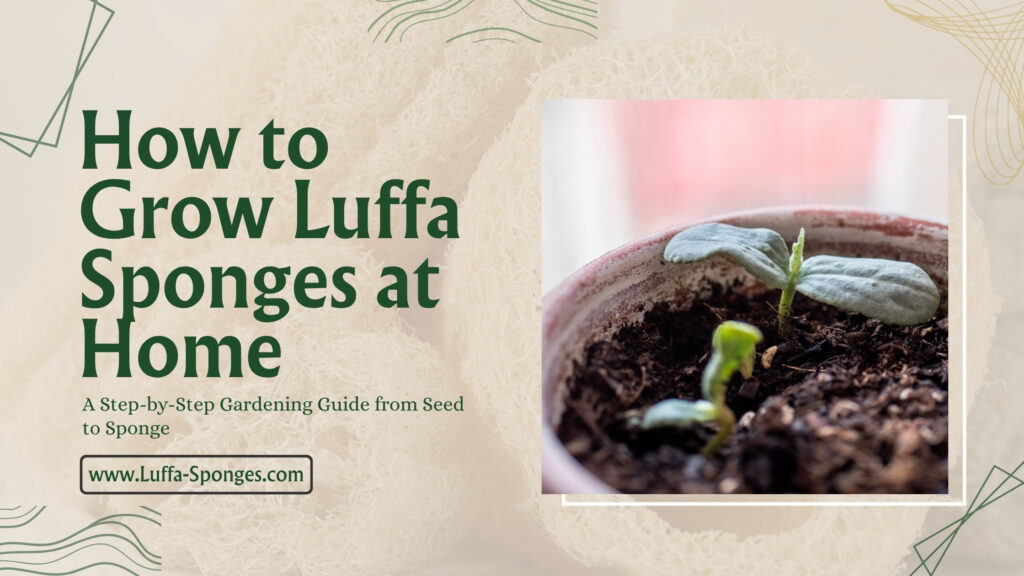
A single luffa vine can produce 15 to 25 usable sponges in one growing season, turning a small backyard trellis into a self-sustaining source of natural, biodegradable scrubbers. Whether you are a home gardener curious about sustainable living or a business professional evaluating the agricultural realities behind the products you source, understanding how to grow luffa sponges at home reveals something important about quality, yield, and why growing region matters more than most people realize.
The natural sponge market continues to expand as consumers and commercial buyers move away from synthetic, petroleum-based alternatives. Luffa sponges, harvested from the mature fruit of the Luffa aegyptiaca vine, represent one of the most versatile plant-based products available. They serve as body exfoliators, kitchen scrubbers, pet grooming tools, and industrial filtration materials. Growing your own gives you direct control over quality and freshness. For wholesale buyers, understanding the cultivation process builds sharper evaluation skills when selecting suppliers and grading raw materials.
This guide walks you through every stage of luffa cultivation, from selecting seeds and preparing soil to harvesting, processing, and evaluating sponge quality. You will find detailed growing timelines, comparison tables between home-grown and commercially cultivated luffa, a quality grading framework used by professional buyers, and practical troubleshooting advice for common growing challenges. Along the way, we draw on EGEXO, an Egyptian loofah exporter since 2015.
If you would rather skip the growing and start with professionally cultivated sponges, you can always see our products for Egyptian luffa.
Understanding the Luffa Plant Before You Grow
Before you put a single seed in the ground, it helps to know what you are working with. Luffa aegyptiaca, sometimes called Luffa cylindrica, is a vigorous annual climbing vine in the Cucurbitaceae family. It is closely related to cucumbers, melons, and gourds. The plant produces long, cylindrical fruit that develops a complex internal fiber network as it matures. That fiber network is the sponge.
Botanical Profile and Growing Requirements
Luffa originated in tropical Asia and has been cultivated for centuries across Africa, South America, and the Middle East. The plant requires a long, warm growing season. In optimal conditions, the vine reaches 5 to 9 meters in length and produces bright yellow flowers that require pollination, usually by bees, to set fruit. Each fruit takes 120 to 200 days from pollination to full maturity, depending on climate and care.
The ideal temperature range for luffa growth is 25 to 35 degrees Celsius. The vine demands full sun exposure of at least 6 to 8 hours daily, consistent moisture without waterlogging, and nutrient-rich, well-draining soil with a pH between 6.0 and 6.8. The Nile Delta in Egypt meets these requirements. The region delivers naturally fertile alluvial soil, reliable subtropical warmth, and growing seasons that allow the fruit to mature fully on the vine without forcing or shortcuts.
To see how our loofah goes from farm to export, read the EGEXO farm to export process.
Why Growing Region Shapes Sponge Quality
Home growers in temperate climates can absolutely produce usable luffa sponges, but it is important to set realistic expectations. Climate directly affects fiber density, wall thickness, and structural uniformity. Sponges grown in shorter seasons or cooler temperatures tend to have thinner walls, looser fiber networks, and smaller overall dimensions. This does not make them worthless, but it does explain the measurable quality gap between backyard luffa and professionally cultivated Egyptian luffa.
Wholesale buyers evaluating raw material for private label manufacturing or retail distribution need fiber density and dimensional consistency that only purpose-grown commercial crops can deliver at scale. Home growing is excellent for personal use, educational projects, and small craft businesses, but large-scale retail and spa applications require the reliability of established agricultural supply chains.
How to Grow Luffa Sponges at Home: Complete Step-by-Step Process
Learning how to grow luffa sponges at home is straightforward once you understand the timeline and key decision points. The following step-by-step process covers everything from seed starting through final harvest.
Step 1: Seed Selection and Starting Indoors
Begin with high-quality Luffa aegyptiaca seeds. Avoid bargain seed packets with low germination rates. Look for seeds that are dark, plump, and firm. Soak seeds in warm water for 12 to 24 hours before planting to soften the hard seed coat and improve germination.
Start seeds indoors 6 to 8 weeks before your last expected frost date. Plant each seed 1.5 to 2 centimeters deep in biodegradable pots filled with a quality seed-starting mix. Keep soil temperature between 21 and 27 degrees Celsius. Germination typically occurs within 7 to 14 days. Seedlings need strong light immediately after emerging to prevent leggy, weak growth. A south-facing window or grow light providing 12 to 14 hours of light works well.
Step 2: Preparing the Outdoor Growing Site
While seedlings develop indoors, prepare your outdoor growing area. Luffa vines need vertical support. Build or install a sturdy trellis, arbor, or fence structure at least 2 to 3 meters tall. The trellis must support significant weight since mature fruit can weigh 1 to 3 kilograms each before drying.
Amend your soil with compost or aged manure to boost fertility. Work the amendments into the top 20 to 30 centimeters of soil. If drainage is a concern, consider raised beds. Luffa roots will rot in standing water. Space planting positions 60 to 90 centimeters apart along the trellis to give each vine room to spread.
Step 3: Transplanting and Early Vine Care
Transplant seedlings outdoors only after all frost danger has passed and nighttime temperatures consistently stay above 15 degrees Celsius. Harden off seedlings over 5 to 7 days by gradually increasing their outdoor exposure before planting them in the ground.
Water deeply after transplanting and apply a 5 to 8 centimeter layer of organic mulch around the base to retain moisture and suppress weeds. During the first month, water regularly to establish a strong root system. Feed with a balanced fertilizer every 2 to 3 weeks during the vegetative growth phase. Once flowering begins, switch to a phosphorus-heavy fertilizer to encourage fruit set.
Step 4: Pollination, Fruit Development, and Monitoring
Luffa produces separate male and female flowers on the same vine. Male flowers appear first and in greater numbers. Female flowers are identifiable by the small swelling at the base of the bloom, which is the immature fruit. Bees and other pollinators handle most of the work, but in areas with low pollinator activity, you can hand-pollinate by transferring pollen from male flowers to female flowers using a small brush.
After successful pollination, fruit develops over the following 60 to 90 days. Monitor fruit regularly for pest damage, unusual spots, or uneven growth. Keep watering consistently during fruit development, but reduce irrigation as the growing season ends and fruit begins to mature. This encourages the plant to redirect energy toward fiber development within the fruit.
Step 5: Harvesting at the Right Time
Harvest timing is the single most critical factor in sponge quality. A luffa harvested too early produces weak, underdeveloped fibers. Left too late, especially after frost or heavy rain, the sponge can develop mold or begin to decompose inside the skin.
The fruit is ready to harvest when the outer skin turns from green to brown or tan, the fruit feels notably lighter than before as internal moisture evaporates, and you hear seeds rattling inside when you shake it. In warmer climates, fruit dries naturally on the vine. In cooler regions with shorter seasons, you may need to harvest green fruit before the first frost and finish drying it indoors in a warm, ventilated space.
Growing Timeline at a Glance
| Stage | Timing | Key Actions | Duration |
|---|---|---|---|
| Seed soaking | 6 to 8 weeks before last frost | Soak seeds 12 to 24 hours in warm water | 1 day |
| Indoor starting | 6 to 8 weeks before last frost | Plant in pots, maintain warmth and light | 6 to 8 weeks |
| Transplanting | After last frost, soil above 15C | Harden off, plant at trellis base | 1 week |
| Vegetative growth | Spring to early summer | Water, feed, train vines on trellis | 6 to 8 weeks |
| Flowering and pollination | Mid summer | Monitor for pollinators, hand-pollinate if needed | 2 to 4 weeks |
| Fruit development | Mid to late summer | Consistent water, pest monitoring | 8 to 12 weeks |
| Maturation and drying | Late summer to fall | Reduce water, watch for color change | 3 to 6 weeks |
| Harvest | Fall, before first frost | Pick when skin is brown and fruit is light | 1 to 2 days |
| Processing | After harvest | Peel, clean, dry, store | 3 to 7 days |
This timeline represents a total growing period of approximately 150 to 200 days from seed to finished sponge, which aligns with what professional growers in Egypt achieve over longer, warmer seasons. The key difference is that Egyptian growers have the climate advantage to let every fruit reach full maturity on the vine, which is why Egyptian luffa quality standards remain the highest in the industry.
Processing Your Home-Grown Luffa Into a Usable Sponge
Harvesting the fruit is only half the work. Processing transforms a dried gourd into the clean, functional sponge you recognize on store shelves. Professional processors follow precise steps to achieve the uniform color, clean fiber, and consistent feel that commercial buyers expect. Home growers can follow a simplified version of this same process.
Peeling, Cleaning, and Drying
Once you have harvested mature fruit, the first task is removing the outer skin. If the fruit dried fully on the vine, the skin often cracks and peels away easily by hand. For fruit that was harvested slightly green and dried indoors, soaking it in warm water for 30 minutes to 2 hours loosens the skin enough to peel it off in strips.
After peeling, hold the sponge under running water and squeeze repeatedly to flush out sap, seeds, and plant residue. A mature luffa fruit contains 30 to 100 seeds that need to be shaken and rinsed out completely. Seeds left inside can cause odor and mold during storage.
For lighter, more uniform color, soak the cleaned sponge in a solution of dilute hydrogen peroxide, approximately 3 percent concentration, for 15 to 30 minutes. Rinse thoroughly afterward. Commercial processors use a similar bleaching step. Standard EGEXO loofah is not bleached. Bleaching is available on request.
Finally, dry the sponges completely in direct sunlight or a warm, well-ventilated indoor space. Moisture content must drop below 12 percent before storage to prevent mold. In sunny conditions, this takes 1 to 3 days. In humid climates, allow extra drying time or use a fan to increase airflow.
Quality Grading Your Home Harvest
Not every sponge from your garden will be the same quality. Professional grading systems sort sponges by fiber density, wall thickness, structural integrity, color uniformity, and dimensional consistency. You can apply a simplified version of this framework to evaluate your home-grown luffa.
| Quality Indicator | High Quality | Acceptable Quality | Low Quality |
|---|---|---|---|
| Fiber density | Dense, tightly woven network | Moderate density, slight gaps | Loose, thin, uneven fibers |
| Wall thickness | 15 mm or more | 10 to 15 mm | Under 10 mm |
| Structural integrity | No holes, tears, or collapse | Minor thin spots | Holes, soft spots, or tears |
| Color after cleaning | Light cream to white | Light tan | Dark brown or spotted |
| Flexibility when wet | Softens evenly, springs back | Adequate softness | Stiff, rigid, or mushy |
| Seed removal | Completely clean | A few remaining seeds | Many seeds embedded in fibers |
| Scent | Neutral, clean | Faint earthy smell | Musty, moldy, or sour |
Sponges that rank high across all indicators are suitable for personal bath and body use or as gifts. Those in the acceptable range work well for kitchen cleaning and household scrubbing. Lower quality sponges can go into your garden as biodegradable seed-starting pots or compost material.
Home-Grown Luffa vs. Commercially Cultivated Egyptian Luffa
Growing your own luffa is rewarding and educational, but it is important to understand how home-grown sponges compare to commercially cultivated products. This comparison helps consumers decide whether growing or buying makes more sense for their needs. It also helps wholesale buyers appreciate why sourcing from professional Egyptian growers delivers a fundamentally different product than domestically grown alternatives.
Detailed Comparison Table
| Factor | Home-Grown Luffa (Temperate Climate) | Commercially Cultivated Egyptian Luffa |
|---|---|---|
| Growing season length | 150 to 200 days, often constrained by frost | 200+ days with consistent warmth |
| Average sponge length | 15 to 35 cm | 20 to 60 cm |
| Wall thickness | 8 to 15 mm | 15 to 25 mm |
| Color consistency | Variable, batch to batch | Highly uniform after processing |
| Yield per vine | 8 to 15 usable sponges | 15 to 25 sponges per vine |
| Processing quality | Manual, variable results | Industrial standards, consistent output |
| Cost per sponge | Low (seeds plus time and labor) | Competitive at wholesale volume |
| Best suited for | Personal use, small crafts, education | Retail, spa, wholesale, industrial use |
| Scalability | Very limited | Designed for bulk production |
| Certification availability | None | Phytosanitary and export documents |
This comparison makes clear that home growing and commercial sourcing serve different purposes. If you want a fun, sustainable garden project that supplies your household with natural sponges, growing at home is ideal. If you are building a brand, stocking a spa, or supplying retailers, the consistency and scale of Egyptian luffa from a proven supplier is essential.
EGEXO provides raw luffa scrubbers and finished products, from sample orders to full container loads. Our loofah comes from our own farms and partner farms and is processed in our own factory.
Common Growing Problems and How to Solve Them
Even experienced gardeners encounter challenges with luffa. The plant’s long growing season and tropical preferences create specific vulnerabilities in temperate and subtropical climates.
Pest and Disease Management
The most common pests affecting luffa include cucumber beetles, aphids, squash vine borers, and powdery mildew. Rotate your planting location each year to break pest and disease cycles. Apply neem oil or insecticidal soap for aphid control. Inspect vine bases regularly for squash vine borer entry holes, which appear as sawdust-like frass near the soil line. Powdery mildew thrives in humid conditions with poor airflow, so spacing vines properly and pruning excess foliage reduces infection risk.
Short Season Solutions
Gardeners in zones with fewer than 150 frost-free days face the biggest challenge. Beyond starting seeds indoors early, you can use black plastic mulch to warm soil faster in spring, cover young plants with row covers to extend warmth in cool nights, select varieties marketed as “short-season luffa” that mature in closer to 120 days, and harvest green fruit before the first frost for indoor drying.
Indoor-dried luffa will not match the fiber quality of vine-dried fruit, but it produces a perfectly functional sponge for personal use. For anyone wanting guaranteed quality without the growing risk, bath and body luffa from EGEXO is grown over a full Egyptian season.
Pollination Failures
If your vine flowers abundantly but sets no fruit, pollination is the likely problem. Urban gardens and areas with declining pollinator populations experience this frequently. Hand-pollination is reliable and simple. Early in the morning when flowers are freshly open, use a small paintbrush or cotton swab to collect pollen from the inside of a male flower and transfer it directly to the stigma of a female flower. Repeat over several days for the best fruit set rate.
Using and Caring for Your Home-Grown Luffa Sponges
Once you have processed your sponges, proper use and maintenance determine how long they last and how hygienic they remain.
Care and Maintenance Schedule
| Task | Frequency | Purpose |
|---|---|---|
| Rinse thoroughly | After every use | Remove soap, skin cells, and debris |
| Squeeze out excess water | After every use | Prevent prolonged moisture retention |
| Hang to dry in ventilated area | After every use | Allow complete airflow drying |
| Inspect for fiber breakdown | Weekly | Identify when replacement is needed |
| Replace sponge | When the fibers wear out | Maintain hygiene and scrubbing performance |
Beyond the Bathroom
Home-grown luffa is not limited to body scrubbing. Cut your sponges into thick slices for effective, zero-waste kitchen scrubbers that replace synthetic pads. Use thinner slices as soap dish inserts that allow bar soap to dry between uses, extending soap life. Craft luffa slices into embedded soap bars by pouring melt-and-pour soap base around a luffa cross-section. This makes a popular handmade gift and a strong small-business product.
Wholesale buyers looking to develop unique product lines can work with EGEXO on custom luffa product design to bring innovative concepts to market.
Business Opportunities: From Home Grower to Luffa Entrepreneur
Some home growers discover a business opportunity hiding in their garden. The demand for natural, eco-friendly bath and kitchen products continues to grow, and locally grown luffa has appeal at farmers markets, craft fairs, and online shops.
Scaling Considerations
Small-scale luffa businesses typically start with 50 to 200 vines producing 500 to 3,000 sponges per season. At this scale, you handle growing, processing, cutting, and packaging yourself.
However, scaling beyond a few thousand units per season creates challenges. Quality consistency becomes difficult to maintain with garden-scale production. Customers expect uniform sizing, fiber density, and appearance across orders. This is the point where many small brands begin supplementing home-grown stock with commercially sourced luffa from professional growers.
EGEXO supports emerging brands. No minimum order on standard products. Private label from 1,000 units. You can also request samples for quality testing and ask about private label luffa manufacturing.
Whether you grow your own, source professionally, or combine both approaches, understanding the full cultivation process gives you a competitive edge in evaluating quality, communicating with suppliers, and educating your customers about the product they are buying.
For a complete overview of available sizes and formats, download the EGEXO product catalog or request a bulk quotation to discuss your specific needs.
FAQ Section
Q1: How long does it take to grow luffa sponges at home?
A: Growing luffa sponges at home takes approximately 150 to 200 days from seed to finished sponge. This includes 6 to 8 weeks of indoor seed starting, 4 to 6 months of outdoor vine growth and fruit development, and 3 to 7 days of post-harvest processing. Warmer climates with longer frost-free seasons produce better results because the fruit has more time to develop dense, high-quality fibers on the vine.
Q2: What climate zones can grow luffa successfully?
A: Luffa grows best in USDA zones 7 through 11 or any region with at least 150 frost-free days and summer temperatures consistently between 25 and 35 degrees Celsius. Gardeners in cooler zones can still grow luffa by starting seeds indoors early, using black mulch to warm soil, and harvesting before frost for indoor drying. However, fiber quality is generally lower in shorter-season climates compared to tropical or subtropical growing regions.
Q3: Why is Egyptian luffa considered better quality than home-grown?
A: Egyptian luffa from the Nile Delta benefits from rich alluvial soil, consistent subtropical warmth, extended growing seasons of 200 or more days, and generations of cultivation expertise. These factors give more consistent, full-size sponges than luffa grown in temperate home gardens. Egyptian loofah is softer, with a looser fibre weave than Asian loofah. Professional processing and grading further ensure uniform quality across large volumes.
Q4: Can I sell home-grown luffa sponges commercially?
A: Yes, home-grown luffa sells well at farmers markets, craft fairs, and online shops. Small-scale growers with 50 to 200 vines can produce 500 to 3,000 sponges per season. Scaling beyond small volumes typically requires supplementing with professionally sourced luffa from suppliers like EGEXO to maintain quality consistency across larger orders.
Q5: What is the minimum order quantity for wholesale luffa sponges?
A: Minimum order quantities for wholesale luffa vary by supplier, product type, and customization level. At EGEXO: No minimum order on standard products. Private label from 1,000 units. Samples are paid, and the sample cost is credited to your first order of $1,000 or more, placed within 60 days.
Q6: How do I prevent mold on my home-grown luffa sponges?
A: Preventing mold requires thorough cleaning and complete drying during processing. Rinse harvested sponges until water runs clear, remove all seeds and sap, and dry in direct sunlight or a warm, ventilated space until moisture content drops below 12 percent. During use, always rinse after each session, squeeze out excess water, and hang the sponge in an area with good airflow. Replace a sponge when the fibers wear out.
Q7: Can luffa be grown in containers or pots?
A: Luffa can grow in large containers of at least 20 liters capacity, but expect reduced yields and smaller fruit compared to in-ground planting. Container-grown vines still need a tall, sturdy trellis and at least 6 to 8 hours of direct sunlight daily. Use high-quality potting mix amended with compost, and water more frequently since containers dry out faster than garden beds. Container growing is best suited for patios and balconies where garden space is unavailable.
Q8: Why EGEXO?
A: EGEXO has been exporting Egyptian loofah since 2015. Our loofah comes from our own farms and partner farms and is processed in our own factory. We offer private label manufacturing and custom product design. No minimum order on standard products. Private label from 1,000 units.
Expert Insight from EGEXO
Since 2015 we have exported Egyptian luffa, and we have learned that the difference between an average sponge and a truly premium one comes down to patience and timing. Many growers, both home and commercial, rush the harvest because they see the fruit reaching full size. But full size is not full maturity. The fiber network inside a luffa fruit continues to develop, strengthen, and densify for weeks after the fruit stops growing in length. Whether you are growing in your backyard or sourcing thousands of units, never rush the harvest. If you want Egyptian luffa for your brand, request a quote.
Conclusion
Learning how to grow luffa sponges at home connects you directly to one of the most versatile and sustainable natural products available. From seed soaking to finished sponge, the process takes 150 to 200 days and rewards you with a renewable supply of chemical-free scrubbers for bath, kitchen, and household use. Home growing is ideal for personal supply, educational gardening, and small craft businesses. For retail brands, spa operators, and wholesale distributors, commercially cultivated Egyptian luffa from EGEXO is available for professional applications.
Understanding cultivation, whether you grow yourself or evaluate a supplier, gives you the knowledge to recognize quality and make informed sourcing decisions.
Key Takeaways:
- Luffa requires at least 150 frost-free days, full sun, and consistent moisture to produce high-quality sponges
- Harvest timing is the single biggest quality factor, with fruit needing to dry fully on the vine for the best fiber development
- Home-grown luffa is excellent for personal use, while Egyptian luffa from EGEXO is available for commercial use
- Processing involves peeling, seed removal, cleaning, optional bleaching, and drying to below 12 percent moisture
- Business opportunities exist at every scale, from farmers market sales to private label brands sourced from professional suppliers
Ready to experience Egyptian loofah quality?
- For Wholesale Buyers: Request a quote or download our catalog
- Products: See our products or request samples