
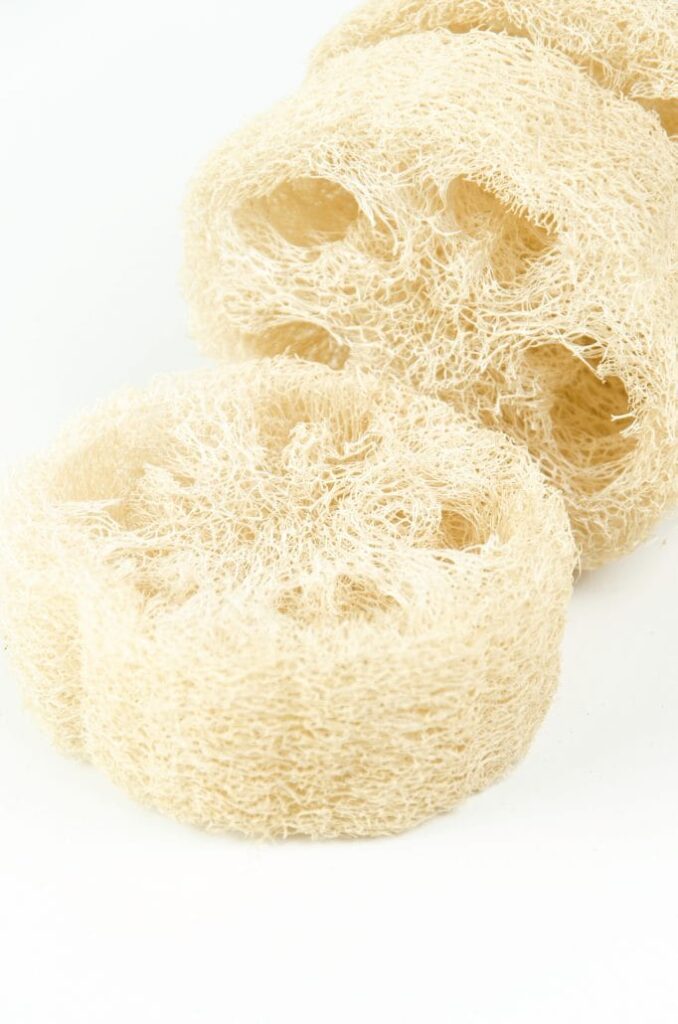
Luffa seeds are the flat, dark seeds that grow inside the luffa fruit, held within the fibre network. When the fruit is fully dry you can crack the skin or open the end and shake them out. The same seeds can be stored and sown the next season.
Quick facts
- Luffa seeds grow inside the fruit, held in the open fibre network that becomes the loofah.
- Luffa is the plant behind loofah sponges, and EGEXO uses Luffa aegyptiaca.
- Loofah is 100% biodegradable.
- EGEXO loofah comes from its own farms and partner farms in the Nile Delta.
Where do luffa seeds come from?
Luffa seeds form inside the fruit after the flower is pollinated. As the fruit grows, many seeds develop along its length. They sit in small pockets between the strands of fibre. When the fruit dries on the vine, the soft flesh around them disappears, but the fibre stays. That is why a dry luffa can rattle when you shake it.
The seeds are usually dark brown to black, flat and slightly oval, with a hard coat. Seed size and shade can vary between plants and between species.
How do luffa seeds leave the sponge?
Once the fruit is dry and light, the seeds are loose inside. You can shake some out through the open end if the fruit has a broken tip. More often you crack the dry skin first, peel it away and then tap or shake the fibre over a tray. The seeds drop through the open mesh, which is why they leave a dry luffa so easily.
The inside of the sponge is a real network and not a solid block. You can read about it in our post on the internal structure of a luffa sponge. If you want the full path from dry fruit to clean sponge, see this overview of what a luffa sponge is.
How do you save luffa seeds?
Pick seeds from a fruit that dried fully on the vine. Seeds from fruit that was picked early may be pale or soft, and they often do not sprout. Spread the seeds on paper in a shaded, airy place until they feel hard and dry, then remove any bits of fibre or skin.
Store the dry seeds in a paper envelope or a glass jar with a lid, in a cool and dry spot. Label them with the plant type and the year. Damp is the main enemy of stored seed, because it leads to mould. Seeds from the healthiest, most productive vines are usually a good choice for the next season.
How do you sow luffa seeds?
Luffa is a warm-season plant and the seeds usually sprout most reliably in warm soil. Some growers soak the seeds in water for a while or gently nick the hard coat to help them sprout. Others start the seeds in pots indoors and move the young plants out when the weather has settled. Direct sowing works where the season is long and warm.
- Choose a sunny spot with a sturdy support for the vine to climb.
- Sow the seeds at a shallow depth in loose, well-drained soil.
- Keep the soil lightly moist until the seedlings are up.
- Protect young plants from cold nights and strong wind.
For a full growing guide, including watering and support, read our home growing guide. Sprouting speed and success depend on the seed, the soil and the weather, so it helps to sow a few extra.
What do luffa seeds look like?
Luffa seeds are flat and oval, with a hard coat. When the fruit is fully ripe they are dark, often black or deep brown. Seeds from an unripe fruit are paler and softer, and they are less likely to sprout. Size and shape can differ between plants, so do not worry if two fruits give slightly different seeds.
A single fruit can hold a large handful of seeds, so even a small harvest of dry fruit gives you more seed than you will need. Share extra seed with other growers or keep it for a second planting if you have the room.
What can go wrong with saved seed?
Most problems come from moisture. Seed that was stored while still damp can mould, and mouldy seed will not sprout. Seed stored in the open can also attract insects. Make sure the seed is dry before it goes into storage, and check the container once in a while.
Another issue is the plant itself. If your luffa plants were crossed with a different type nearby, seed from them may give fruit that looks different from the parent. Growers who care about a particular type often keep seed from their strongest plants only. If a seed does not sprout, try a few more before giving up, since not every seed in a batch will come up.
How many seeds should you sow?
It helps to sow a few more seeds than you need, because not every seed sprouts and young plants can be lost to cold, damp or pests. Once the seedlings are strong, thin them out and keep the healthiest. Crowded seedlings compete for light and tend to stay weak. A good vine needs room, so one or two strong plants per support are often better than many weak ones.
What does EGEXO do with the seeds?
EGEXO does not sell luffa seeds. For us the seeds are a by-product of making loofah. They are shaken out when the fibre is cleaned, and the fibre goes on to be dried, cut and finished in our factory in Damanhour, Egypt.
If you are buying finished loofah for a shop or brand, browse the EGEXO loofah range and ask for samples. Each product has its own quantity tiers, and prices are given in the quote.
Frequently asked questions
Where are the seeds in a luffa?
They sit inside the fruit, in small pockets of the fibre network. When the fruit is fully dry they become loose and rattle.
How do I get the seeds out of a dry luffa?
Crack the dry skin, peel it off and shake or tap the fibre over a tray. The seeds fall through the mesh.
Can I plant seeds from a loofah sponge I bought?
Usually not. A sponge sold in a shop has already been cleaned of its seeds, and the seeds that came out of it may not have been saved.
How long do luffa seeds stay good?
Dry seeds kept cool and dry often stay usable for a while, but results vary with the seed and how it is stored.
Do luffa seeds need a warm place to sprout?
Yes, luffa is a warm-season plant, and seeds usually sprout most reliably in warm soil.
This site is published by EGEXO For Export, a family-run exporter in Damanhour, Egypt. To see finished loofah products made from the fibre, visit the EGEXO shop page and ask for a quote or samples.